

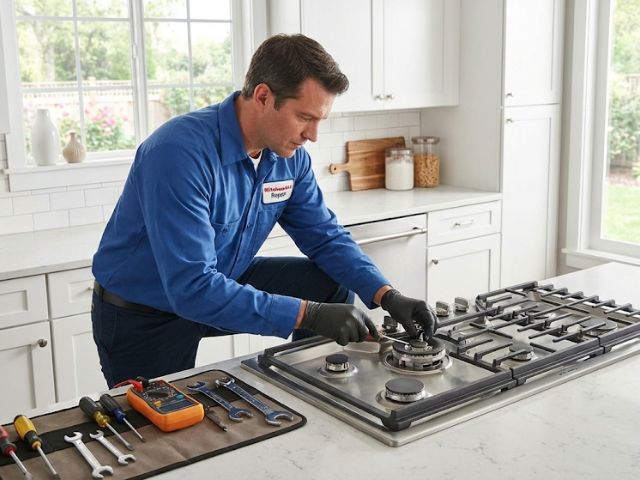
In one of Glendale’s quiet residential neighborhoods, a modern kitchen suddenly became a source of stress for a homeowner family. Their built-in cooktop—once the centerpiece of daily meal preparation—began showing unpredictable heating issues, delayed ignition, and uneven flame distribution. What started as a minor inconvenience quickly escalated into a full cooking disruption.
Breakfasts were rushed, dinners were delayed, and takeout became a daily fallback. For a household that relied heavily on home-cooked meals, the malfunction was more than a technical issue—it disrupted routine, budget, and comfort.
The family initially attempted basic troubleshooting, cleaning burners and checking gas flow. However, the problem persisted, signaling a deeper internal fault that required professional diagnosis.
Early Warning Signs That Were Initially Ignored
Before the complete breakdown, subtle indicators had already started appearing. Like many homeowners, these signs were overlooked:
- Occasional clicking sounds without ignition
- Flame strength fluctuating during cooking
- Burners taking longer than usual to light
- Slight gas odor during startup
These early symptoms are common in aging cooktops but are often dismissed until performance worsens significantly. In this Glendale case, the delay in addressing the issue led to more complicated internal wear, especially in the ignition system and burner valves.
A Targeted Diagnostic Approach That Changed Everything
When professional technicians arrived, the first step wasn’t repair—it was precise diagnostics. Instead of rushing into part replacements, a full system evaluation was conducted.
Key findings included:
- Faulty ignition module causing inconsistent spark generation
- Partially clogged burner ports affecting gas flow
- Worn-out control knobs leading to inaccurate flame adjustments
- Minor electrical connection degradation beneath the cooktop surface
This structured approach helped isolate the root causes instead of treating surface-level symptoms. It also prevented unnecessary replacement of fully functional components.
The focus was clear: restore performance without compromising system integrity.
Precision Repair Strategy for Long-Term Performance
Once the issues were identified, the repair process was carefully executed in stages to ensure reliability and safety.
The repair strategy included:
- Cleaning and recalibrating burner assemblies
- Replacing ignition system components responsible for spark failure
- Securing and restoring electrical connections
- Testing gas flow consistency across all burners
Each step was followed by performance verification to ensure the cooktop responded accurately under real cooking conditions.
Instead of a quick fix, the goal was long-term stability—ensuring the cooktop would not only work again but maintain consistent performance under daily use.
Restoring a Modern Kitchen to Full Functionality
After repairs were completed, the transformation was immediate. The cooktop that once struggled to ignite now delivered instant, stable flames. Heat distribution became even, allowing the homeowner to return to multi-dish cooking without interruptions.
The family noticed several improvements:
- Faster meal preparation time
- Consistent flame control for precise cooking
- Elimination of startup delays and irregular ignition
- Improved kitchen safety and confidence during use
What was once a frustrating appliance became fully reliable again, restoring both convenience and peace of mind.
Preventive Insights Gained From the Glendale Repair Case
This case highlighted several important lessons for homeowners relying on built-in cooktops:
- Small ignition delays often indicate deeper electrical issues
- Burner inefficiency can stem from both gas and electronic faults
- Routine cleaning alone cannot resolve internal system failures
- Early intervention prevents costly component replacements
Regular maintenance plays a critical role in extending cooktop lifespan. Many major repairs begin as minor issues that escalate due to delayed action.
For homeowners wanting to avoid similar breakdowns, learning more about early warning signs is essential. A helpful resource can be found here:
Is It Time for a KitchenAid Tune-Up? 5 Signs to Watch
Why Professional Repair Outperforms DIY Fixes
In many Glendale homes, DIY repair attempts are common when appliances start malfunctioning. However, cooktops involve both gas and electrical systems, making improper handling risky.
Professional intervention offers key advantages:
- Accurate fault identification using specialized tools
- Safe handling of gas and electrical components
- Access to manufacturer-level repair techniques
- Long-term reliability instead of temporary fixes
In this case, earlier DIY efforts had unintentionally pushed debris deeper into burner channels, worsening ignition inconsistency. Professional correction resolved not just the symptom but the underlying cause.
The Role of Trusted Local Expertise in Appliance Restoration
Behind the success of this repair was a structured, experienced service approach supported by KitchenAid Repairs. Their involvement ensured that the Glendale cooktop restoration followed industry standards, from diagnosis to final testing.
What stood out in this case was not just technical skill, but consistency in process—ensuring every burner was tested, every connection verified, and every safety parameter checked before completion.
Local expertise played a major role in:
- Faster response time
- Understanding common household appliance patterns in Glendale homes
- Efficient sourcing of compatible replacement components
- Personalized repair execution based on appliance usage habits
Long-Term Maintenance Practices for Homeowners
After the repair, the homeowners adopted a new maintenance routine to prevent future breakdowns. These practices included:
- Weekly burner cleaning to prevent clogging
- Monthly ignition checks for responsiveness
- Immediate attention to unusual flame behavior
- Avoiding liquid spills near control knobs and ignition points
These simple habits significantly reduce the likelihood of recurring issues and help maintain consistent performance across all burners.
A well-maintained cooktop not only performs better but also enhances kitchen safety and energy efficiency.
Lessons From a Successful Glendale Cooktop Recovery
This Glendale case demonstrates how timely professional repair can completely restore a critical kitchen appliance. What began as a frustrating breakdown ended as a fully optimized cooking system capable of handling daily culinary demands.
Key takeaways include:
- Early warning signs should never be ignored
- Proper diagnostics are essential for accurate repair
- Professional servicing ensures safety and long-term reliability
- Preventive maintenance is the key to avoiding future disruptions
For homeowners, the message is clear: addressing issues early can save both time and cost while restoring kitchen functionality faster.
Final Thoughts: Bringing Kitchens Back to Life
A malfunctioning cooktop can disrupt more than cooking—it affects daily routines, family time, and overall household efficiency. The Glendale repair case shows that with the right approach, even complex appliance issues can be resolved effectively and safely.
When performance declines, taking immediate action ensures your kitchen remains a place of comfort and productivity rather than stress.
Reliable repair solutions, structured diagnostics, and preventive care together create a lasting difference in appliance performance and household convenience.